FIFTYSEVEN is an independent biotech branding and web design studio, remote by design, founded in 2016 and led by Petar Stojakovic, working with founders in Switzerland, the UK and the US. The biotech and life science branding work here is for platform companies whose science is about to be read outside the lab: by partners, by the scientists they want to hire, and by capital. Brand strategy, identity, the pitch deck, 3D and film, and a website the studio designs and builds. Published work: Roswell Biotechnologies, now SemiconBio; 1910 Genetics, now 1910; and Koniku, each back for a second engagement.
TRUSTED BY
Roswell Biotechnologies, now SemiconBio
1910 Genetics, now 1910
Koniku
The sentence that makes your technology easier to understand is often the one your scientific team is least comfortable signing off.
They have a point.
Somewhere in the simplification, a distinction disappeared. The explanation is cleaner, but it could now describe several other companies. The person responsible for the science wants the detail back. The head of marketing, or whoever has to communicate it, knows the audience was already struggling.
Meanwhile, there is a meeting on Thursday.
1.
WHAT A BIOTECH WEBSITE HAS TO DO BEFORE THE MEETING
A biotech company gets introduced in rooms the founder has not entered yet.
Three readers arrive, each with a reputation attached:
The scientist you are recruiting, who may be the most careful reader the company will have.
The partner's team, who need to picture the platform inside their own pipeline.
The investor, deciding whether the next meeting is worth taking.
Underneath all three, the same questions: can I trust them, are they the experts, is this worth it.
An unclear website rarely kills a deal. It slows one, and it charges the founder for the delay: the offering introduced again in every meeting, how the platform works explained again, the evidence found again.
The founder becomes the missing page of the website, and the missing page is billed in founder hours nobody planned to spend.
Good branding and a good website move that first explanation ahead of the meeting, so the meeting starts at the questions that need a founder. How much of that time comes back depends on the deal and on who is in the room.
If you have to defend this spend to your CEO, the case is two lines long: the website answers the first questions before the meeting, and the deck, the website and the data room tell one story about what the company offers, in every room it enters.
A decade in, FIFTYSEVEN keeps its own score, and the design is not on it: it is the round that closed, the market entered, the senior hire who said yes. A brand does not raise a round. It is in the room when the round is closed.
2.
The chip that reads a single molecule
Roswell Biotechnologies, now SemiconBio
Based:San Diego, U.S.A.
Field:Molecular electronics
FOCUS
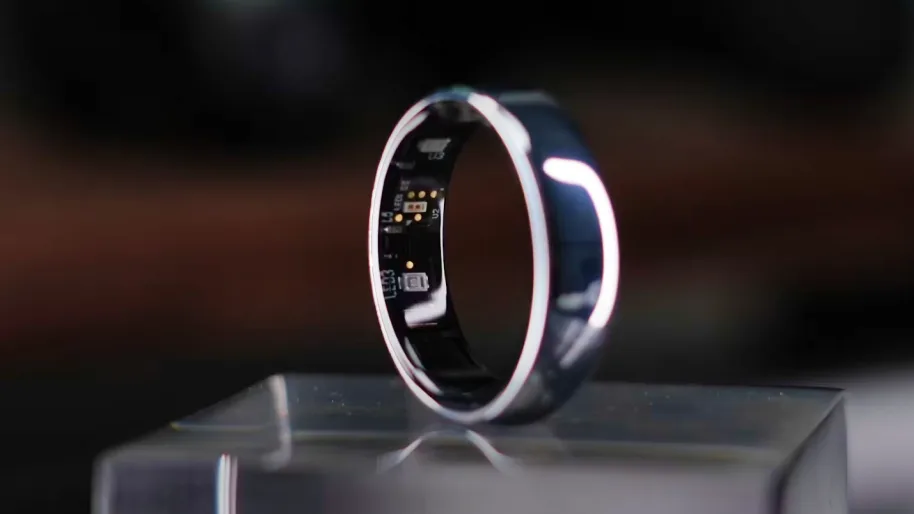
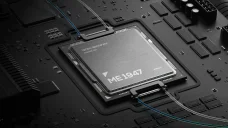
In molecular electronics, Roswell had built a chip: one molecule, wired into a circuit, read as an electrical signal, "ultimately compatible" with standard microchips in the company's words.
THE WORK
Photographing the chip was easy; the relationship between the molecule and the electronics took explaining. The identity, design system and website connected what happens on the chip to what it makes possible for a diagnostics buyer and a sequencing partner.
Roswell then came back for its launch: the reveal event, the website and the launch film. The company continues today as SemiconBio, under a new name and the same identity and website.
Founded in 2018, 1910 Genetics began with two AI platforms, ELVIS for small molecule drugs and ROSALYND for protein therapeutics, and one aim: "to make undruggable targets a thing of the past". That was the start of what it now calls "pioneering small and large molecule therapeutics discovery". In 2026 it relaunched as 1910 and put the platform to work across pharma, as "an infrastructure for AI-enabled drug discovery". The stated ambition goes further: to make every pharma company an AI company.
THE WORK
For 1910 Genetics, the brief reached beyond explaining AI drug discovery: a visual language for its computational platforms, with a human reason to care about the result. The first engagement built the brand identity and the website.
The second, in 2025 and early 2026, repositioned the company as an AI-native platform for pharma partners: a new identity and the website 2.0 at 1910.ai, designed to explain a multi-part platform component by component, in the company's own names, to the business development reader in a pharma company who has ten minutes and a mandate.
ON RECORD
Funding:$40M raised, per the company's investor page, where its investors are named.
A good biotech website explains the platform clearly enough for talent, partners and investors to follow without help, and puts the evidence next to the claim. It is the last of four disciplines that run as one practice here: strategy places the platform in its field; branding gives it a voice, a form and a presence; content carries the mechanism into 3D, film and motion; digital builds the website and the deck where partners and investors decide.
The platform has to land whole: simplify too little and the room drifts, too much and the people who know the field discount the rest. A platform claim holds when it arrives with an application: what a partner does with it, in which indication or modality, before how it works.
The pages depend on the business, and each has one job:
Platform. A picture of the mechanism a reader can carry into the next conversation.
Technology. The science underneath the platform, at the depth a partner's scientist expects and the IP allows; a separate page; it answers a different reader.
Applications. A route in for each audience.
Pipeline. Where one is published, current before the diligence call, not corrected during it.
Team and advisors. The people a scientific hire and an investor's advisor will look up first.
Careers. Written for the talent the company is competing for: what it is like to work there, the values the team runs on.
Investors and news. The same company the deck describes, on the day the news goes out.
6.
Living neurons, wired into silicon
Koniku
Based:Berkeley, U.S.A.
Field:Neurotechnology on a chip
FOCUS
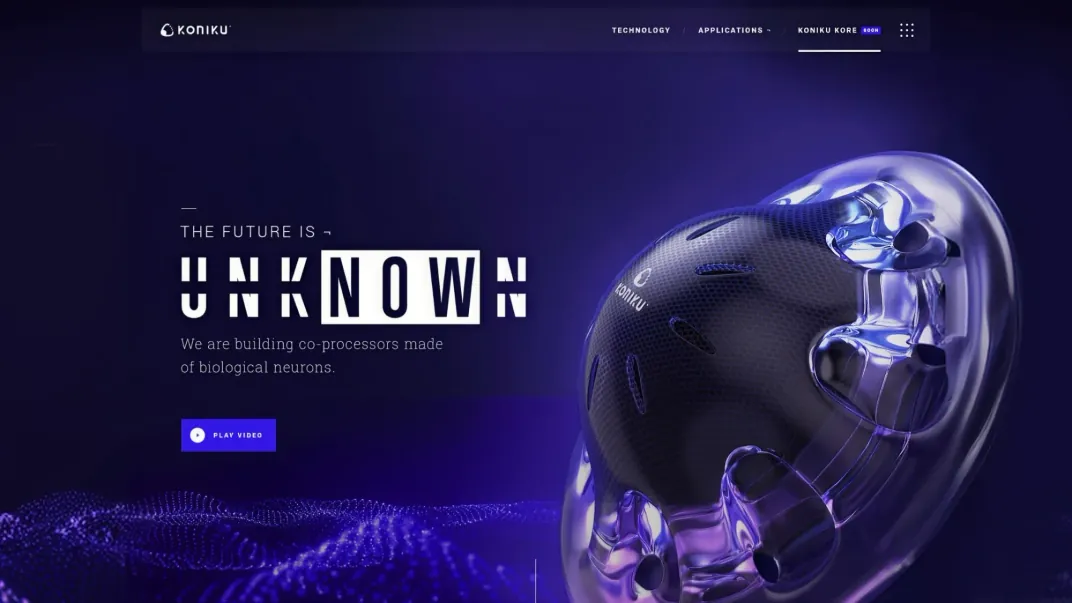
Neurotechnology on a chip: Koniku is, in the company's own words, "merging synthetic neurobiology with silicon". Its co-processors are made of biological neurons, with DNA deciding which receptor each neuron carries, the way code decides what a computer produces.
THE WORK
The introduction has to get past the science-fiction double take and into what the technology does.
The studio built the brand identity and the website, then two explainer films, and later the client-side application for the company's devices, all on the one brand identity system.
An investor deciding whether to take the next meeting
The offering and the public record on one page, beside each other
A website that reads as a quiet pitch, and a deck in the same system
A partner's technical team
The platform pictured inside their business
Platform and application pages, explainer film, 3D visualisation
A scientific hire
The science intact, the team visible
Team and careers pages, tone of voice, photography direction
A diagnostics buyer or licensing partner
A route in of their own
Application pages, technical content structure
The CEO and the scientific lead, reading the same page
Something the CEO can send and the scientific lead can sign
Identity, design system, website in Webflow or custom code, motion for web and deck
8.
HOW A BIOTECH ENGAGEMENT RUNS
It starts with the science, and it runs on sign-offs:
Positioning before design; one direction before any build; each technical page approved by the people who own the science before it goes live.
A confidential disclosure agreement (CDA) covers what the studio may see; what may be shown publicly is agreed before the first sketch.
The brand and its trademarks belong to the company, entirely, and the website runs on a content management system the team runs after handover, as 1910's and Roswell's do.
Founder time is treated like the round's own money: one read of every technical page, the calendar left alone in between, and a handful of decisive sessions on the vision, the message and the offering.
Typically three to four months to a launched brand and website; with 3D and film in scope, a little over four. When a round is closer than the calendar, the deck and a one-page website come first, in the final system.
Every engagement is led by Petar Stojakovic, Founder and Design Director, in every meeting the founder, CEO or CMO is in. The rest of the week belongs to a senior team he assembles for the brief.
BIOPHARMA AND LIFE SCIENCE WEBSITE DESIGN BY SECTOR
Where the studio has published work in a category, the client is named; the rest of the list is open to a brief. What the studio brings is the same in every one of them: fluency in the sector, a narrative for the technology, and the design standard the published work shows.
Published work
AI drug discovery and techbio platforms:1910 Genetics, now 1910
Molecular tools, sequencing and diagnostics:Roswell Biotechnologies, now SemiconBio
What does a biotech web design and branding agency do?
It turns a scientific platform into a brand non-specialists understand and specialists trust: positioning, identity, website, pitch deck, 3D and film, from pre-seed to Series A and beyond.
When does a biotech need a specialist design agency, and when is a generalist fine?
A generalist is fine while the website only has to say the company exists. The moment the science has to be explained, a generalist learns it on your time.
FIFTYSEVEN has explained a molecular chip, a computational drug discovery platform and a biochip before.
Do you work with therapeutics and clinical-stage companies?
As a brief, not as a track record. The studio's published biotech work is platform companies; it has not published a clinical-stage therapeutics brand and does not imply it has.
What transfers is the method: sign-off by the people who own the science, and a pipeline chart that matches the last data the company disclosed.
How do you explain proprietary biotech technology without revealing it?
In biotech the proprietary part is usually the point, so the website shows function, not recipe: what the platform does, by analogy, in 3D or in motion; unpublished protocols and data stay behind the CDA.
How does branding help a biotech raise money?
It makes the company's differentiation legible before the first meeting: what the platform does that the last three decks in the investor's inbox did not, with the evidence beside the claim.
The deck carries much of that weight and is judged in minutes: the stage set early, the platform understood by the middle, the value visible by the end. The website has to match it; the investor's technical advisor reads both.
Do you design biotech pitch decks?
Yes, on the brand foundation and inside the same system as the website, so the non-confidential deck a partner forwards and the website their scientist opens the next morning are the same company. Roswell's and 1910 Genetics' decks were part of their engagements.
A deck on its own is a smaller scope, quoted as one.
When does a biotech rebrand make sense?
When the current brand was built for a reader the company has outgrown: the scientific talent it is competing for looks at the website before the offer; the pharma partners it wants read the website before the non-confidential deck; it is about to scale, or to raise on a story its brand no longer tells. 1910 Genetics has built on it twice: the first brand, then the repositioning.
How long does a biotech website take?
Three to four months from brief to a launched brand and website; add 3D visualisation and an explainer film and it runs a little over four. Research, identity, website design and development overlap.
When a raise or a partner announcement forces a faster run, that is an exception with its own price, taken when the studio has room; the brand phase gets compressed, never dropped.
Do you build the website or just design it?
Both, and the full scope goes further: strategy, brand identity, 3D visualisation, explainer and promo film, and the website, under one creative direction, built in Webflow or custom code on a content management system the team updates the day the next announcement goes out.
What does biotech branding and website design cost?
Mid to high five figures for most biotech engagements; the smallest, tightly scoped ones start at $30,000: the essentials done properly, meaning the positioning, the core brand identity and a landing page.
3D visual assets, film and explainer, the deck, the full brand system and the full website come on top, each as its own scope. An entry engagement usually runs two to three months.
No quote goes out before the scope is set; the proposal states what is excluded, which technical pages the scientific lead signs off and how many founder sessions it needs, and the Webflow account, the code and the trademark are the company's on delivery. More in the studio FAQ.
FIFTYSEVEN AT A GLANCE
Studio:
FIFTYSEVEN, independent branding and web design studio, remote by design, founded 2016, led by Petar Stojakovic
Clients in:
Switzerland, the UK and the US
Biotech work:
Roswell Biotechnologies, now SemiconBio; 1910 Genetics, now 1910; Koniku; each returned for a second engagement
the page your scientific lead would sign is the page your investor would forward.
11.
SOURCES AND PUBLIC RECORDS
Company funding and studio deliverables are separate records. The figures describe company trajectories; the studio claims the work, not the causality.



 Paul Mola Founder, President & CEO
 Osh Agabi Founder, CEO & CTO